
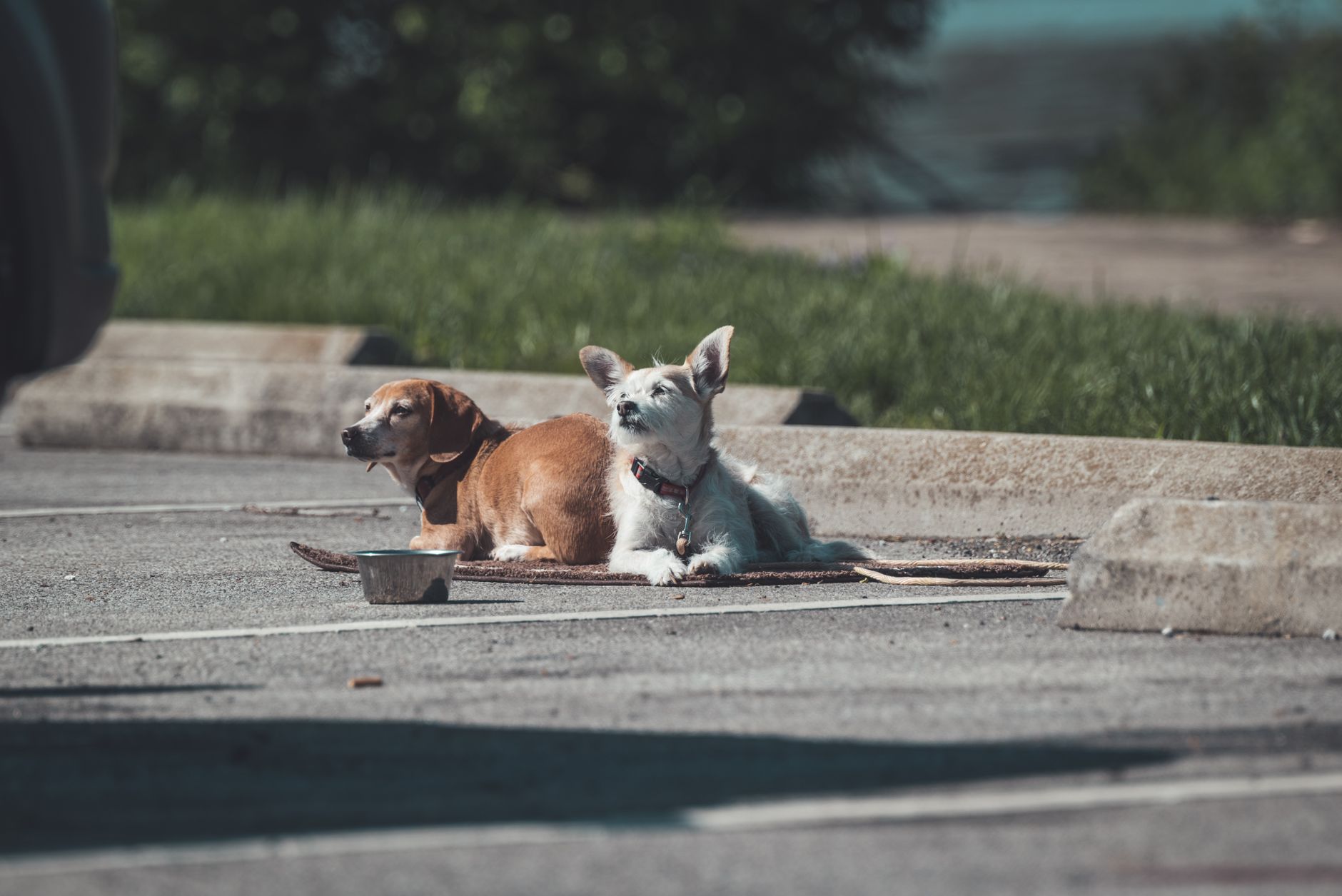
Port Moody loses power most winters, usually in a windstorm between November and February. The pet half of a storm plan takes twenty minutes to put together and is almost entirely about paperwork and water. The hazards that actually hurt pets are downed lines, fallen branches and the heat sources people use when the power is off.
What a storm actually does to a household with pets
Atmospheric rivers and wind events arrive here from late autumn, and the pattern is consistent: heavy rain saturates the ground, wind brings trees down onto lines, and power goes off for somewhere between an hour and three days. Around the inlet, mature trees and overhead lines make outages a normal part of winter rather than an exceptional one.
For a pet, four things change at once. The house gets cold. The routine stops. Doors and fences get damaged, which creates escape routes. And people bring alternative light and heat indoors, which is where most of the genuine danger lies.
The kit, which is mostly not equipment
Put this in one bag or box, in a cupboard by the door, and check it in October each year.
- Water. Three days’ worth, rotated. If your building is on a pump, an outage means no running water at all. This is the item people most often skip and most often need.
- Food for a week, in sealed containers, plus a manual can opener. Rotate it so it does not go stale.
- A written list of anything your pet is given daily, with the product name, the strength, how often, and the name of the practice that supplies it. Write it on paper. A phone with a flat battery is no use at all, and this list is the single most valuable thing in the box.
- At least a week’s supply of those daily items, and a note of when they expire. If your pet is on something they cannot miss, make it two weeks. If any of it lives in the fridge, it will not survive a long outage there: move it to a cooler with ice packs as soon as the power goes, keep it cold rather than frozen, and phone us about replacing it if the outage runs past a day.
- A carrier per cat, not one shared between two. In a hurry, two cats in one carrier is how someone gets scratched and a cat gets loose.
- A spare leash and a well-fitted harness, plus a second harness or a martingale-style collar if your dog can back out of a flat collar. A frightened dog backs out of a collar.
- Your pet’s microchip number and the registry name, written down, and a current photograph printed rather than only on a phone.
- Litter, a disposable tray, and bags. A cat who will not use a soiled tray will find a carpet.
- Blankets and a towel, and for a small pet a hot water bottle wrapped thickly in a cover.
- A battery carbon monoxide alarm, tested, with spare batteries. It is the only thing that detects the hazard above before a person or a pet does.
- A headlamp and a wind-up or battery lantern. Not candles, for the reason below.
- Our number and the number of the nearest open emergency hospital, written on the inside of the lid.
The things that cause harm during an outage
Generators and anything burning fuel. This is the serious one. A generator, a camp stove, a propane heater or a barbecue used in a garage, a carport, a porch or anywhere not fully open produces carbon monoxide, and pets are often affected before people are because a smaller body with a faster breathing rate takes the gas up more quickly. Carbon monoxide is not heavier than air and does not sit near the floor: it mixes evenly through a room, so no part of the house is safer than another. The signs are nonspecific, which is what makes this dangerous: sleepiness, wobbliness, vomiting, a pet who seems confused or will not get up. If you are running a generator, it goes at least six metres, about twenty feet, from the building, with the exhaust pointing away from doors, windows and vents, and never in a garage even with the door open. If a pet becomes unsteady or unusually sleepy while one is running, turn the generator off, get everyone including yourself out into fresh air, and come in.
Candles. A tail clears a side table without the dog noticing, and a cat walks along a mantel. Use battery lanterns and flameless candles instead. If you do light a flame, it goes somewhere a pet cannot reach and it does not stay lit when you leave the room. If a pet is burned or their coat is singed, run cool water over the area for several minutes, put nothing else on it, do not use ice, and phone us, because burns look far milder in the first hour than they turn out to be.
Downed power lines. Assume every fallen line is live, keep your dog on a short leash, and stay back at least ten metres, about the length of a bus, including from puddles and fences near it. A wet surface conducts. Call 911. Do not touch a pet who is in contact with the line or the ground near it. This is the hazard most likely to be fatal.
Fallen branches and debris. Wet leaves hide broken glass, nails in storm debris and torn fencing. Cut pads are a common storm-season injury. If a pad is cut, stop the walk, cover it with any clean cloth, and come in the same day, because pad wounds bleed persistently and pick up dirt.
Damaged fences. Check the yard before letting the dog out after a wind event, every time. A panel down is an open gate.
Flooded storm drains and creeks. Water moving fast in a culvert is far stronger than it looks, and the banks are undercut. Keep dogs leashed near the inlet and the creeks after heavy rain. If a dog does go in, do not go in after them: call 911 and keep them in sight from the bank. Most dogs self-rescue downstream where the bank flattens.
Cold. A house without heat drops fast overnight. Puppies, kittens and newborns are most at risk of all, because they cannot hold their own temperature, then older pets, thin or short-coated pets, small pets and anyone recovering from illness. Move beds away from windows and exterior walls, add layers, and keep small animals in the warmest interior room. Shivering that stops while the animal is still cold, cold ears and paws, or a pet who is limp and slow to respond means the temperature has dropped too far: wrap them, warm them gradually rather than with direct heat, and phone us or the emergency hospital straight away.
Fish and reptiles. An aquarium without a heater or filter, or a vivarium without heat, is on a much shorter clock than a dog is. Insulate the tank with blankets, paying attention to the hood where most heat is lost, stop feeding, and keep the water moving, because the air supply goes when the filter does. A battery air pump is the right answer, and failing that, scoop a jug of water out and pour it back every hour or so to get air into it.
Noise and the fear it causes
A windstorm is loud for hours rather than minutes, which makes it different from fireworks. Dogs who are frightened by it tend to pace, pant, drool, cling, hide or try to dig their way into somewhere enclosed.
What helps: a small interior room with no windows, a bathroom or a closet, with a bed, a blanket over the top of a crate if your dog likes a crate, and something producing steady sound if you still have power. Let them hide where they choose rather than pulling them out to comfort them. Shut the cat flap and keep cats in for the duration, because a cat who bolts during a storm goes a long way.
If your dog is genuinely panicked by storms every winter, that is worth a conversation with us before the season rather than during an event, because there is more that can be done with a plan than on the night.
Come in through our urgent care for storm injuries. Our pet diagnostics team is what a possible carbon monoxide exposure or an unexplained collapse needs, and our medical services team handles wound care and the recheck on a cut pad.
We are open 8:00 AM to 8:00 PM Monday to Friday, and 9:00 AM to 7:00 PM on Saturday and Sunday. Storms peak overnight more often than not, so the window to plan around is 8:00 PM to 8:00 AM on weekdays and 7:00 PM to 9:00 AM on Saturday and Sunday. If a pet is unsteady while a generator is running, has a deep cut, or has gone through a broken fence and come back injured, go to the nearest open emergency hospital and have a passenger call ahead. Note also that an outage may take our phones down even during opening hours, so having the emergency hospital’s number written on paper is worth the thirty seconds.
Our guide to collars, harnesses and retractable leads covers the equipment side of this, which matters more than usual on a windy walk with a frightened dog.
Questions we are asked
How long an outage should I actually plan for?
Three days of water and a week of food is a sensible planning figure for this area, and most outages here are far shorter than that. The reason to plan long is not the likely case, it is the awkward one: a wind event on a Friday night in a neighbourhood with a lot of tree cover, where crews work through a queue. Planning for three days costs almost nothing and removes the decision entirely.
Is it safe to run a generator in the carport if it is open on two sides?
No. A carport, a porch, an open garage and a doorway are all places where carbon monoxide collects, and “open on two sides” is not the same as outdoors. It needs to be well away from the building with the exhaust directed away from doors, windows and vents. Pets are usually affected before people notice anything, so by the time you feel unwell, your dog has had a longer exposure than you have.
My dog panics in wind. Is there anything to do in the moment?
Let them choose where to hide and do not block it, make that spot more enclosed with a blanket, and stay nearby without fussing over them. Steady background sound helps if you have power. What does not help is bringing them out to reassure them, or punishing the pacing. For a dog who does this every winter, the useful work happens between storms rather than during one, so bring it up at the next visit.
What if the roads are blocked and I cannot get to you?
Phone first, including if you think we may be closed, because we can tell you what to do in the meantime and which hospital is open and reachable. If you cannot reach us, because an outage can take our lines down, go straight to the number you wrote on the lid of your kit, which is why that one is worth writing down in October rather than looking up in the dark. For a wound, controlling bleeding with firm continuous pressure and a clean cloth, held for a full ten minutes without lifting it to look, and adding another cloth on top rather than removing the first if it soaks through, keeping your pet warm and quiet, and not giving anything by mouth covers most of what can be done at home. Do not tie anything tightly around a limb. The things that genuinely cannot wait are breathing difficulty, ongoing bleeding and a pet who is collapsed, and for those it is worth asking a neighbour with a clearer route.
Should I put a note on the door about my pets?
Yes, and it is a good idea generally rather than just in a storm. A card by the front door listing the number and type of animals in the house, and where they are likely to hide, is genuinely useful to anyone who has to enter in an emergency. Keep it current when the household changes.
Is tap water safe after a storm here?
Usually yes, but boil water notices do get issued after heavy rain in some systems. If one is in effect, it applies to your pets too. That is the main reason to keep stored water rather than rely on filling bowls from the tap during an event.
My cat disappeared during the last windstorm and came back two days later. Anything to do?
Have her looked at, even now. A cat who has been out through a storm may have a wound hidden under fur, and puncture wounds from a fight or a fence seal over and build underneath over several days. It is also the moment to check the microchip registry details are current, which we can scan and confirm at the visit, though you will need to update the registry entry yourself.
Speak to the team at Newport Village Animal Hospital
If your pet has been injured in a storm, has a cut pad, or has become unsteady or unusually sleepy while a generator or fuel heater is running, phone us and come in. Outside our hours, go to the nearest open emergency hospital and have a passenger call ahead.
Published by the team at Newport Village Animal Hospital.
This article is educational in nature and is not a replacement for hands-on assessment of your own pet by a veterinarian.
Newport Village Animal Hospital
276 Newport Dr, Port Moody, BC V3H 5B9
Phone: (604) 492-3900
Email: vetsnewport@gmail.com
Hours: Monday to Friday 8:00 AM to 8:00 PM; Saturday and Sunday 9:00 AM to 7:00 PM