
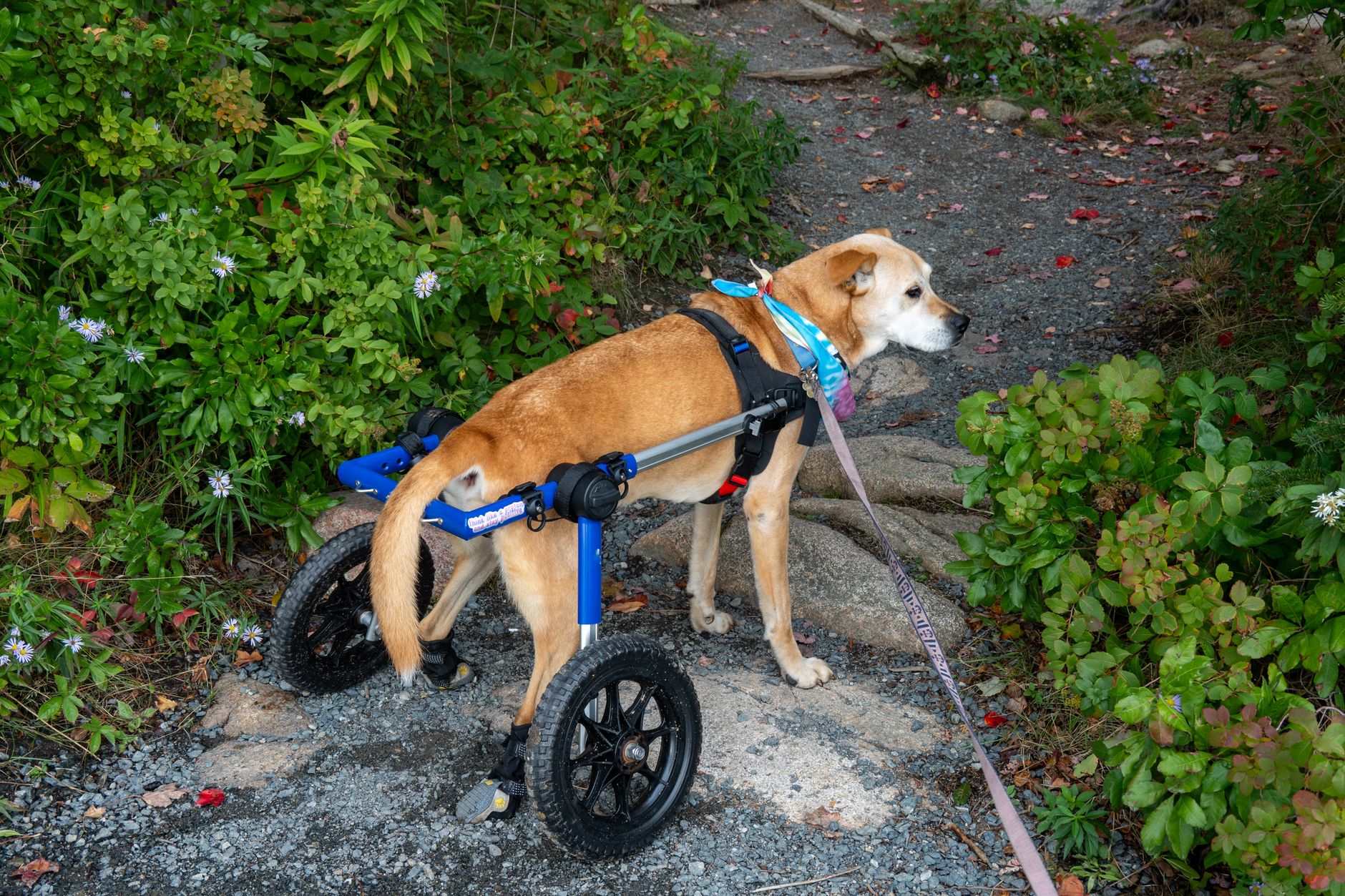
November is when owners start noticing. The walks get shorter, the dog spends longer in one spot, and getting up takes a little more organizing than it used to. It is read as the pet slowing down with age, and the part that gets missed is how much of it is pain rather than years.
Why it becomes visible now rather than in July
There is a popular belief that cold and damp make sore joints hurt more. The honest answer is that the canine evidence is thin. One study put activity monitors and owner pain scores against daily weather in 62 arthritic dogs and found that humidity, rainfall and barometric pressure predicted nothing at all, while temperature and daylight together explained less than one percent of how much those dogs moved. It was a small study, and it was built to check whether weather distorts research results rather than to hunt for a cold-weather flare, so read it as reassuring rather than settled. In people, the largest study of the question — nearly 2,700 of them, tracked for more than a year — did find a real effect, but a small one. Humidity mattered most, rain did not, and a damp, windy day shifted the odds of a painful day by roughly one in a hundred.
What genuinely changes in a Port Moody winter is everything around the animal. The forty-minute evening walk becomes fifteen. They lie down for longer stretches, and stiffness after rest is the most reliable sign there is. You are probably indoors with them more, which is simply more chance to notice. And less movement means muscle loss, which means less support for the joint, which means more discomfort.
So the pain was probably there in July. Winter is when the conditions line up for you to see it, and when the downward loop starts running faster.
What it actually looks like
Limping is the sign owners wait for and one of the last to appear. Dogs with sore joints in more than one leg do not limp; they slow down evenly.
- Stiff for the first few minutes after getting up, then loosening off.
- Taking the stairs one at a time, or hesitating at the bottom of them.
- Lagging behind on the second half of a walk when they used to lead.
- Sitting down instead of standing while waiting.
- A changed sitting posture, with a back leg held out to one side.
- Getting up in stages rather than in one movement.
- Licking repeatedly at one joint.
- New irritability about being touched, brushed or lifted, or about another pet barging past.
Cats are the ones we miss most. Cats rarely limp with joint pain, and when they do it is seldom the first thing you notice. Instead they stop doing things: the high perch they always used, the windowsill, jumping onto the bed, or using a litter box with high sides. A cat who has quietly dropped one habit is telling you something.
What actually changes the trajectory
Arthritis is manageable, often substantially so, and the things that help most are not the things owners expect.
- Body weight is the biggest lever you control. Every extra kilogram is carried through sore joints at every step. Weight loss in an overweight arthritic dog produces a visible improvement more reliably than anything else on this list, and it does not require buying anything.
- Short and frequent beats one big outing. Three short walks do more good than one long weekend hike, which commonly leaves a sore animal on Monday.
- Traction at home. Runners along the routes they actually use, from the bed to the door and the landing at the bottom of the stairs.
- A ramp instead of a jump for the car, and a step up to the sofa if they are allowed on it.
- Keep the nails short and the hair between the pads trimmed. Basic maintenance on an older animal.
- A firm, supportive bed on a non-slip surface, rather than a soft one that they sink into and have to climb out of.
- For cats, lower the barriers. A litter box with one low side, a step up to the favourite perch, food and water that do not involve a jump.
Alongside that, there is a great deal we can offer in the clinic, and it works better when it is started before the animal has stopped moving. Booking an in-clinic assessment is the starting point, and we watch them move and check each joint through its range, while imaging and laboratory work tell us what is wear and what is something else. A dog who suddenly cannot bear weight at all is a different problem and goes through urgent care.
That last point matters. Hind-end weakness in an older dog is not always joints. Nerve and spinal problems, muscle loss driven by something internal, and hormonal conditions all look similar from the doorway and quite different on examination. A change over days rather than months is a reason to come in promptly rather than assuming it is the cold.
Our hours
We are open Monday to Friday from 8:00 am to 8:00 pm and Saturday and Sunday from 9:00 am to 7:00 pm. We are closed on statutory holidays.
Stiffness is rarely urgent and these hours cover it comfortably. A pet who suddenly cannot stand, is dragging a limb, has lost control of their bladder, or is crying out has a different problem. If that happens when we are closed, go to a 24-hour veterinary hospital rather than waiting for us to open. If you would rather have a name in your phone before you need it, call us during our hours and we will give you a current referral recommendation.
Common questions
My dog is only seven. Is that too young for this?
No. In a large breed, seven is well into the age where joint change is common, and the earlier it is addressed the more function there is to protect.
Should I stop walking them?
No, and this is the most common mistake. Rest makes muscle loss worse. Controlled, regular, moderate exercise is part of the answer; what you cut is the long, hard, occasional outing.
Do joint supplements work?
The evidence is mixed and they are not a substitute for weight control. Ask us before you buy, because quality varies enormously and some are worth having alongside everything else.
How do I know if my cat is sore?
By what they have stopped doing rather than by how they walk. Write down the perch, the windowsill or the jump they used to do and no longer attempt, and bring that list.
Is there anything that reverses it?
No, and anybody who says otherwise is selling something. What is realistic is a comfortable animal who keeps moving, and that is worth a great deal.
Speak to the team at Newport Village Animal Hospital
If your older dog or cat has slowed down this autumn, book an assessment rather than putting it down to age. Bring a list of what they have stopped doing, and start the weight conversation if there is weight to lose.
Published by the team at Newport Village Animal Hospital.
This article is educational in nature and is not a replacement for hands-on assessment of your own pet by a veterinarian.
Newport Village Animal Hospital
276 Newport Dr, Port Moody, BC V3H 5B9
Phone: (604) 492-3900
Hours: Monday to Friday 8:00 am to 8:00 pm; Saturday and Sunday 9:00 am to 7:00 pm; closed statutory holidays