
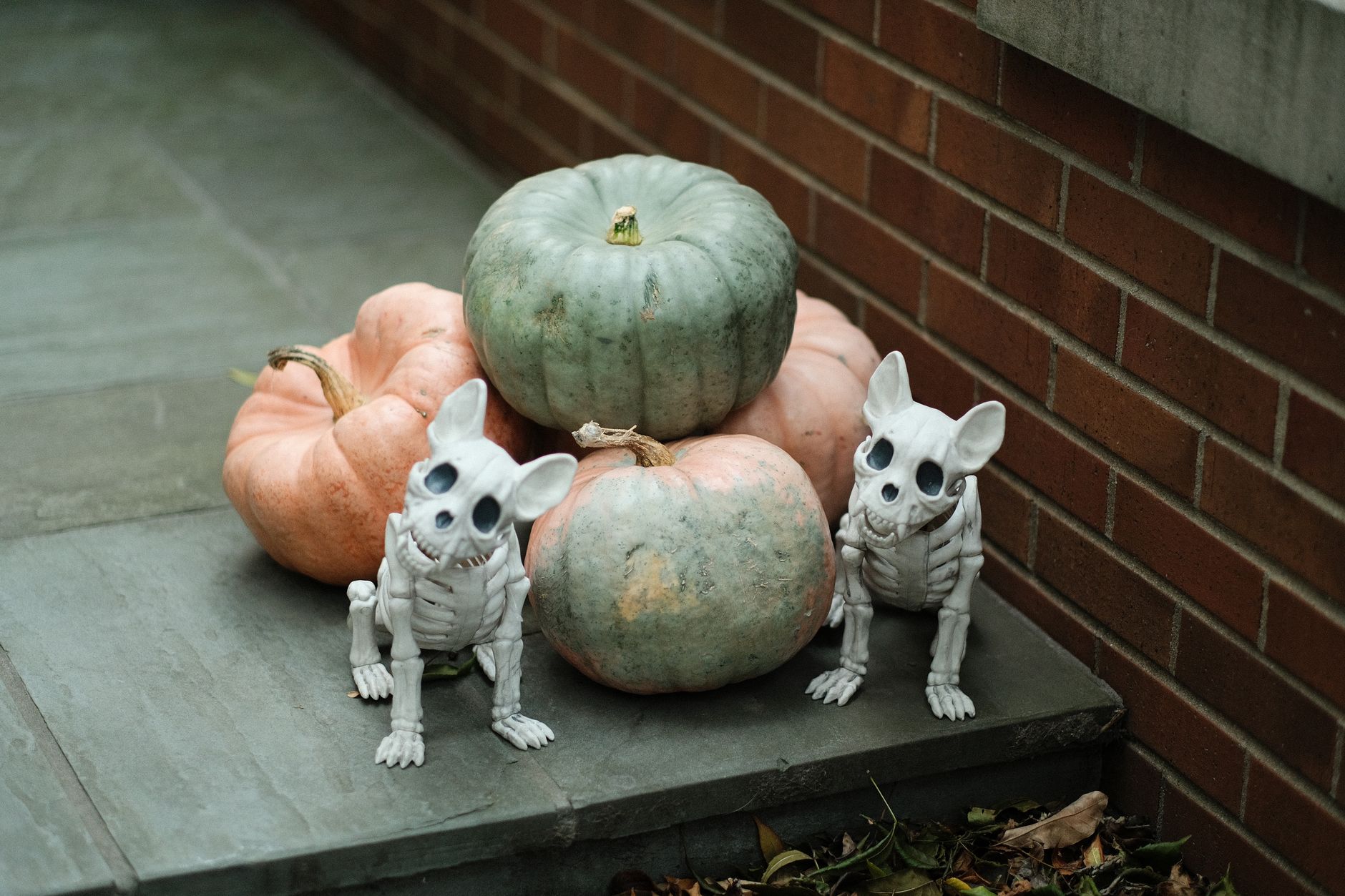
Halloween sends more pets to veterinary clinics than almost any other single evening. Four things account for nearly all of it: chocolate and sweets within reach, a front door opening a hundred times, costumes, and decorations that get chewed. The preparation that works takes a few weeks, so start now.
Why Port Moody has a busy night
Newport Village and the surrounding streets are walkable, family-heavy and well lit, which is exactly what makes a good trick-or-treating neighbourhood. Households here see more callers than a typical suburb, and people drive in to walk the better streets.
For most of the year that is the appeal of living here. On the thirty first of October it means three hours of near-constant doorbell, strangers in unfamiliar outfits, and a front door standing open in a house where the dog is already unsettled.
Fireworks add to it. In Port Moody they are scattered across the days around Halloween rather than confined to the night, so the noise problem is a week long rather than an evening.
The reason to think about this in September is simple: a safe room your dog already likes, a microchip record you have checked, and a costume your cat has met before are all things you cannot arrange on the afternoon of the day.
Sweets, which is the biggest single risk
Halloween puts more chocolate at floor level in a house than any other time of year, usually in a bowl by the door and a bag in a child’s bedroom.
- Chocolate. Risk depends on type and amount relative to your dog’s weight. Dark chocolate and cocoa powder carry far more of the problem compound than milk chocolate. Signs include restlessness, a racing heart, vomiting, tremors and seizures
- Xylitol, sometimes labelled birch sugar. In sugar-free sweets, gum and some baked goods. More dangerous than chocolate. It causes a rapid severe drop in blood sugar and can cause liver failure, and very small amounts matter
- Raisins, in the small boxes handed out as a healthier option and in baking. These cause kidney failure in some dogs and there is no reliably safe quantity
- Wrappers, lollipop sticks and foil, which cause obstructions and are swallowed alongside the sweet
- Macadamia nuts in some chocolates, which cause weakness and tremors
If your pet gets into the bowl, phone straight away and count wrappers rather than guessing. Keep the packaging, because ingredients and cocoa percentage change our assessment.
Tell the children the actual reason
The bowl by the door is rarely the problem. The problem is a bag of sweets taken upstairs and left on a bedroom floor. Children respond far better to being told that chocolate and sugar-free sweets can make the dog seriously ill than to a rule about tidiness. Give them somewhere high to put the bag and make it their job.
The door is the other half
An open front door, repeatedly, in the dark, with an excited or frightened animal in the hallway is how pets are lost on Halloween. Cats slip out and do not come back for days. Dogs push past into a neighbourhood full of strangers.
- Set up a safe room away from the front door now, so it is familiar and pleasant well before the night
- Bring cats in before dusk and keep them in for the evening
- Check the microchip registration is current. Five minutes, costs nothing, and it is the difference between a lost pet coming home that night and not coming home
- Collar and tag with a current number, quick release for cats
- Use a baby gate or closed inner door as a second barrier
- Take a current photo and keep it on your phone
- Consider handing sweets out from the porch with the door shut behind you
A dog that does get out and meets other dogs in the dark is also a bite risk in both directions, and our guide to bite wounds and when to seek care covers why even a small puncture needs looking at.
Costumes and decorations
Costumes suit some pets and genuinely distress others. The test is simple. Put it on, and if your pet freezes, tries to remove it, will not walk normally or looks flattened, take it off. A bandana achieves the photograph without the distress.
If you do use one, check it does not restrict breathing, movement, vision or the ability to open the mouth, that there is nothing dangling to chew off and swallow, and never leave a costumed pet unsupervised. Introduce it a couple of weeks beforehand rather than on the night.
Around the house:
- Glow sticks and glow jewellery, very commonly chewed by cats. The contents taste foul and cause drooling and foaming, alarming but usually short lived
- Candles and lit pumpkins, which cause burns and knocked-over flames. Battery lights instead
- Fake cobwebs and streamers, which get eaten and can obstruct
- Electrical cords for lights and animated decorations
- Small props that come off decorations at pet height
Noise, and the week around it
Fireworks and the doorbell are the two triggers, and the doorbell is underrated. A dog that reacts to one visitor will react a hundred times in three hours and is genuinely worn out by the end.
Disconnect or muffle the doorbell and sit outside to hand out sweets. Put background sound on in the safe room, close the curtains, and feed and walk your dog well before dark. Walk earlier in the day rather than at dusk when the streets fill up.
If your pet has a serious noise fear, come and talk to us in the next few weeks. Our medical services team can look at the whole picture, and there is considerably more that can be done with a month of preparation than on the night.
When to phone us
Contact our urgent care team straight away for:
- Any amount of chocolate, sugar-free sweets, gum or raisins eaten
- Swallowed wrappers, foil, sticks or decoration parts
- Restlessness, a racing heart, tremors or seizures
- Repeated vomiting, or retching without producing anything
- Weakness, wobbliness or collapse
- Any pet that escaped and came back different
- Distress that is not settling once the house is quiet
Frequently asked questions
My dog ate one small chocolate. Is that an emergency?
Phone us with the wrapper to hand. Whether it matters depends on the type of chocolate and your dog’s weight, and that is worth calculating properly rather than guessing. Many of these calls end with monitoring at home, which is a far better position than wondering all evening.
Should I keep my cat in for the whole week?
The night itself is the essential part. Given that fireworks around here are spread across several days, keeping cats in from dusk through that stretch is sensible. If that is a change for your household, start shifting the evening meal earlier now so it is established before you need it.
My dog loves people. Can he greet the trick-or-treaters?
Consider it from the visitor’s side too. Small children in the dark, already excited, meeting a large excited dog at an open door is how bites happen even with lovely dogs. Most owners find it easier to keep the dog behind a gate and hand sweets out from the porch.
My cat chewed a glow stick. What now?
Phone us, but do not panic. The contents are extremely bitter, so cats usually drool, foam and dash about. Offer a little food or water to clear the taste, wipe any liquid off the coat before your cat grooms it, and call if there was eye contact with it or the reaction does not settle within a few minutes.
Are costumes cruel?
Not inherently, and plenty of pets are unbothered. It depends on the animal and the costume. If your pet freezes, hides, tries to get it off or stops walking normally, that is a clear no, and there is no reason to push it when a bandana does the same job.
What is the single most useful thing I can do now?
Check your pet’s microchip registration details are current. It takes five minutes, costs nothing, and it is the difference between a lost pet coming home the same night and not coming home at all.
Speak to the team at Newport Village Animal Hospital
If your pet struggles with noise or visitors, come and talk to us now rather than at the end of October. Call us on (604) 492-3900.
Published by the team at Newport Village Animal Hospital.
This article is for general educational purposes only and is not a substitute for an in-person veterinary examination or advice about your individual pet. If you have an urgent concern about your pet, contact Newport Village Animal Hospital or your nearest emergency veterinary hospital right away.
Newport Village Animal Hospital
276 Newport Dr, Port Moody, BC V3H 5B9
Phone: (604) 492-3900
Email: vetsnewport@gmail.com
Hours: Monday to Friday 8:00 AM to 8:00 PM; Saturday and Sunday 9:00 AM to 7:00 PM